Bad hotel SEO rarely looks like a disaster while it is happening. There is no dramatic moment, no obvious failure, no alarm. Instead there is activity: content being published, reports arriving, tasks being ticked off, a sense that work is being done. The property feels looked after. And underneath the reassuring motion, the damage accumulates quietly, thin content burying the pages that mattered, empty tactics that never book, a few risky shortcuts that will eventually cost far more than they saved. By the time it shows up in the numbers, months have passed and the hole is deep. The worst hotel SEO does not announce itself. It looks like being taken care of, right up until it does not.
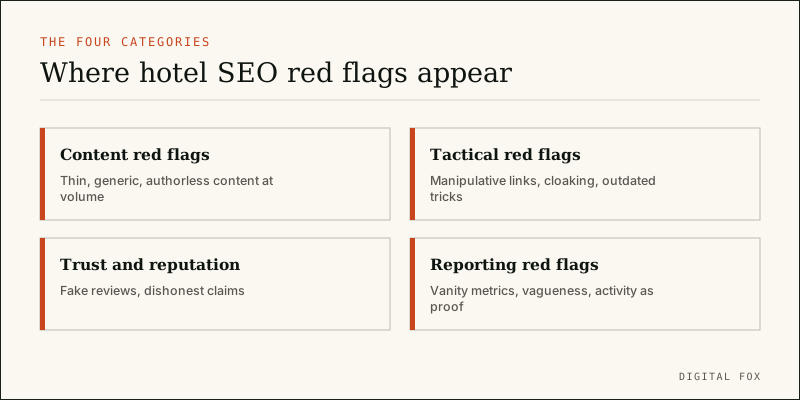
This is the guide to spotting it before that point. Some hotel SEO is not merely ineffective but actively harmful, quietly damaging a property through thin and generic content, empty and outdated tactics, risky shortcuts that court penalties, and reporting designed to obscure the lack of results. The damage is insidious precisely because it is disguised as activity, and a hotel that cannot recognize the warning signs may pay for months or years of work that leaves it worse off than doing nothing would have. Learning to recognize the red flags, in the work, the tactics, and the reporting, is one of the most protective things a hotel owner or operator can do, because it is the difference between catching harmful SEO early and discovering it only after the damage is done.
So we will work through the warning signs honestly. The content red flags, thin, generic, mass-produced material that buries a property rather than building it. The tactical red flags, the outdated and manipulative techniques that range from useless to dangerous. The trust and reputation red flags, including the ones that can do lasting harm to how a property is seen. The reporting red flags, the ways bad work disguises itself as success. And, throughout, how to tell genuinely harmful SEO from work that is merely imperfect, because not every flaw is a red flag, and knowing the difference matters.
Why hotels are especially exposed.
The warning signs make more sense once you see why hospitality in particular attracts so much of the bad practice in the first place.
Before naming the warning signs, it is worth understanding why hotels are unusually vulnerable to harmful SEO, because the vulnerability explains why so much bad practice finds its way to hospitality specifically and why vigilance matters more here than in many industries.
Hotels are exposed partly because they are attractive, high-value targets for volume-driven, low-quality SEO. A hotel has endless surface area for thin content, every room type, every nearby attraction, every event, every season, and a generic content operation can generate an enormous quantity of shallow material aimed at all of it, which looks like productivity and is largely liability. The abundance of plausible-sounding topics is precisely what lets a thin-content operation appear busy and thorough while producing almost nothing of value. The very richness of a hotel's potential topics makes it easy to bury the property under generic filler, and a property that equates volume with value is especially likely to accept it.
Hotels are exposed, too, because their operators are usually not SEO specialists and are busy running a demanding operation. A hotelier judging SEO from outside the discipline, with limited time to scrutinize it, is reliant on the practitioner's account of the work and susceptible to reassuring activity and impressive proxies, which is exactly the environment in which harm hides. The information gap between a busy operator and a practitioner producing the work is where a lot of bad SEO lives, because the operator often cannot easily tell genuine asset-building from disguised harm, which is the whole reason this guide exists.
And hotels are exposed because the stakes on trust and reputation are so high, which makes the reputation red flags particularly dangerous for them specifically. A hotel lives on its reputation to an unusual degree, guests are choosing where to spend something that matters, largely on the basis of how the property is seen, so manipulation of reviews and dishonest claims do disproportionate damage to a hotel, and the temptation to manipulate is correspondingly present, and a property that does not recognize the reputation red flags may not realize the danger until it has already materialized. The combination of rich surface area for thin content, operators who are not specialists, and unusually high reputational stakes makes hotels a place where harmful SEO both proliferates and does real damage, which is precisely why recognizing the red flags is so valuable for a property.
There is a further reason hotels attract bad practice, which is that the results genuinely take time, and time is cover for harm. Because legitimate hotel SEO builds over months, a harmful program can run for a long while before the absence of real results becomes undeniable, and the delay lets the reassuring activity and proxy reports sustain the illusion of progress well past the point where a faster-feedback business would have noticed. The realistic timeline for genuine results, set out in how long hotel SEO takes, is a legitimate feature of the discipline, but it is also exploited by harmful practice as a shield, since the property, told correctly that results take time, waits patiently while harm accumulates. Knowing the difference between legitimately-slow good work and harm hiding behind the slowness is part of what the red flags are for.
The content red flags.
Content is where most hotels are harmed, and fortunately it is also where the warning signs are easiest for a non-specialist to see once they know the shape of them.
The most common form of harmful hotel SEO is bad content, produced at volume, that actively damages a property rather than merely failing to help it. The content red flags are the easiest to spot once you know what you are looking at, and the most important, because content is where most of the harm is done.
The clearest red flag is thin, generic content produced at volume. When a property is having large quantities of shallow, interchangeable content published, the generic area guides, the padded listicles, the keyword-driven filler that could have appeared on any hotel's site, that is a warning sign, because this is exactly the kind of low-value content the quality systems now discount and, worse, that can drag down the perception of the whole site. Volume of thin content is not a sign of a hard-working SEO program; it is a sign of one producing liability, a dynamic examined in why hospitality blogs underperform and in the quality-update recovery covered in recovering from a Google core update.
A related red flag is content with no genuine experience or expertise behind it. If the content is anonymous, authorless, and demonstrably written by someone with no real knowledge of the property or the place, generic in a way that reveals no first-hand experience, that is a warning sign, because it is precisely the experience-free content the quality systems are built to discount, and it wastes the property's single greatest content advantage. The absence of real authorship and genuine expertise, the substance of E-E-A-T for hotels, is a red flag that the content will underperform and may harm the site.
Another is keyword-stuffed or unnatural content. Content visibly written for search engines rather than people, stuffed with keywords, awkwardly repetitive, optimized to the point of reading badly, is a warning sign of outdated, manipulative practice that no longer works and can actively signal low quality. If your content reads as though it was written to hit keywords rather than to help a guest, that is a red flag, because modern SEO rewards genuinely useful content and penalizes the transparent manipulation that keyword stuffing represents. The common thread across the content red flags is that harmful content is generic, experience-free, and machine-oriented, the opposite of the specific, genuine, guest-oriented content that actually works.
What makes the content red flags especially insidious is that they compound. A single thin page is a small waste; a program producing thin pages steadily, month after month, accumulates a mass of low-value content that weighs on the whole site and takes real effort to unwind, since the pages have to be found, assessed, and pruned or rewritten, the work described in content refresh and pruning. The property does not just fail to benefit from the thin content; it inherits a cleanup liability that grows the longer the harmful program runs, which is why catching the content red flags early matters so much. The difference between stopping a thin-content program at month two and month twenty is the difference between a minor correction and a major remediation.
The tactical red flags.
Content is the visible half of the problem; the other half lives in the techniques a property usually cannot see, which is what makes them both harder to catch and, at the dangerous end, more costly.
The next set of warning signs lives in the techniques rather than the words, and they run from the merely pointless to the genuinely dangerous.
Beyond content, a set of tactical red flags signals SEO built on outdated or manipulative techniques that range from merely useless to genuinely dangerous. These are harder for a non-specialist to spot, but the warning signs are recognizable once named.
The first is manipulative link building. If the property's SEO involves acquiring links through obviously manipulative means, buying links in bulk, low-quality directory and spam links, link schemes and networks, that is a serious red flag, because these practices violate search-engine guidelines and can bring penalties that harm the property, the opposite of the genuine authority-building covered in digital PR and link building for hotels. Real authority comes from genuine recognition and quality links earned through real value; manipulative link building is a shortcut that courts real danger, and a hotel should be alarmed to find it happening in its name.
The second is outdated technical manipulation. Techniques that once worked and now do not, or that were always against the rules, hidden text, cloaking, doorway pages, manipulative redirects, and similar tricks, are red flags of an SEO practice stuck in an era of manipulation that modern search has moved past and actively penalizes. If the work involves anything that feels like tricking the search engine rather than genuinely serving the guest, that is a warning sign, because the manipulation is both ineffective and risky. Modern hotel SEO is about genuinely being the best answer, not deceiving the systems into thinking you are.
The third is a focus on tactics disconnected from the business. SEO that busies itself with tactical activity, chasing minor technical tweaks, pursuing keywords disconnected from bookings, optimizing things that do not matter, while ignoring the actual commercial reality of the hotel, is a subtler red flag: not dangerous, but wasteful, activity for its own sake rather than in service of filling rooms. If the work seems disconnected from the property's real commercial needs, the direct-booking goal, the demand calendar, the OTA dynamic, that is a warning sign that the SEO is not really aimed at the business, a disconnection that runs through why your SEO tools give the wrong answers. The tactical red flags range from dangerous manipulation to mere waste, but all signal SEO that is not doing the genuine, business-aligned work that actually helps.
A practical difficulty with the tactical red flags is that they are the hardest for a non-specialist to detect, since they hide in technical work the operator cannot easily see. This is exactly why the trust question matters so much: a property often cannot personally verify whether the link building is manipulative or the technical work is manipulative, so it has to rely on whether the practitioner is genuinely trustworthy and hotel-literate, and on independent scrutiny when in doubt. The invisibility of the tactical red flags to a non-specialist is a reason to weight the practitioner's honesty and expertise heavily, and to be willing to seek an outside opinion, rather than assuming that because you cannot see a problem there is not one.
The trust and reputation red flags.
If the content and tactical red flags are about work that fails or wastes, the next set is about work that can actively wound the property in ways that are slow and painful to heal.
Some red flags matter more than others because the asset they threaten is so hard to rebuild once damaged, and nothing is harder to rebuild than a hotel's reputation.
Some of the most damaging red flags involve trust and reputation, because harm in this area can be lasting and hard to undo, and because a hotel's reputation is one of its most valuable assets. These warning signs deserve particular vigilance.
The most serious is fake or manipulated reviews. If the property's SEO or reputation work involves generating fake reviews, manipulating ratings, or gaming review platforms, that is a grave red flag, because it is dishonest, against the rules of every serious platform, and capable of catastrophic reputational and legal harm if discovered, the opposite of the genuine review strategy in hotel reviews and reputation management. Genuine reviews are a powerful trust signal; fake ones are a time bomb, and any practice generating them is putting the property at serious risk for a short-term gain that can collapse disastrously.
A related red flag is dishonest or manipulative content and claims. Content that overstates, misleads, fabricates, or manipulates, false claims about the property, invented credentials, misleading representations, is a warning sign both because it erodes the trust that modern search rewards and because it sets expectations the stay cannot meet, producing the disappointed guests and poor reviews that damage the property. Dishonesty in the content is a red flag for the SEO and for the business, since the guest discovers the truth on arrival regardless, and the manipulation rebounds on the property.
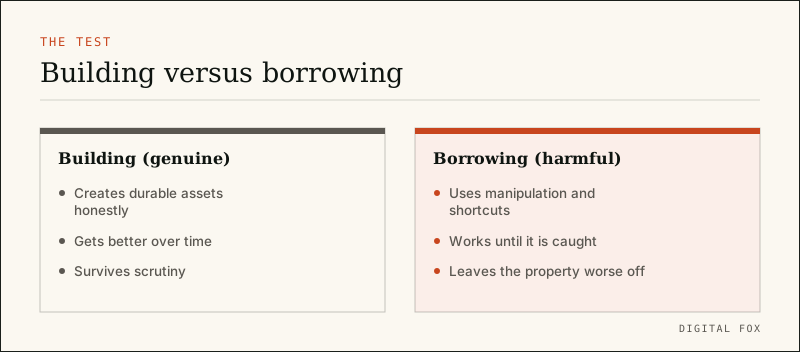
A subtler red flag is practices that risk the property's standing for short-term gain. Any SEO that trades the property's long-term reputation, trust, or search standing for a short-term boost, aggressive tactics that court penalties, manipulation that works until it is caught, shortcuts that borrow against the future, is a warning sign, because the hotel bears the eventual cost while the practitioner may be long gone. If the work feels like it is gaming something rather than genuinely building the property's standing, that is a red flag, because genuine hotel SEO builds durable assets, reputation, authority, trust, entity, while harmful SEO borrows against them, and the borrowing always comes due.
The reputation red flags carry a particular sting for hotels because the harm can outlast the SEO engagement entirely. A penalty can be recovered from, thin content can be pruned, but a reputation damaged by exposed manipulation, fake reviews discovered, dishonest claims contradicted by real guest experiences, can follow a property for a long time, since trust is slow to rebuild once broken. This asymmetry, that reputational harm is easy to inflict and hard to undo, is why the trust red flags warrant the most vigilance of all, and why a property should react to any hint of review manipulation or dishonesty not as a tactic to reconsider but as a practice to stop immediately, before the damage becomes the kind that does not wash out.
The reporting red flags.
Fortunately, the disguise that harmful SEO wears has a recognizable shape, and it shows most plainly in how the work reports on itself.
Even a property that cannot judge the underlying work can often catch harmful SEO from the reports alone, because bad work has to disguise itself and the disguise has a recognizable shape.
Because harmful SEO has to disguise its lack of results, a distinct set of red flags appears in the reporting, the ways bad work presents itself as success. These are among the most useful warning signs, because they are visible even to a property that cannot judge the underlying work.
The clearest reporting red flag is vanity metrics with no business outcome. Reporting that leads with traffic, rankings, and impressions and never reaches bookings and revenue is a warning sign, because it may be disguising a lack of business results behind impressive-looking proxies, the whole subject of judging hotel SEO by revenue rather than vanity metrics. If the reports are full of rising proxy metrics while your direct bookings stay flat, that disconnect is a red flag that the work is producing activity, not outcomes, and that the reporting is designed to obscure it.
Another is vagueness about what is actually being done and achieved. Reporting that is vague, jargon-heavy, or evasive about the specific work performed and the concrete results, that resists clear explanation of what was done and what it produced, is a warning sign, because clarity is easy when there are genuine results and evasion is convenient when there are not. If you cannot get a clear, specific account of what the SEO is actually doing and achieving for your business, that opacity is a red flag.
A third is activity presented as achievement. Reporting that emphasizes how much was done, the volume of content, the number of tasks, the busyness of the work, rather than what it achieved for the business, is a subtler red flag, because activity is not outcome, and a report that substitutes the former for the latter may be hiding the absence of the latter. If the reporting is all about how hard the work is working and never about what the business gained, that emphasis is a warning sign. The reporting red flags share a theme: bad work reports activity, proxies, and volume, while good work reports business outcomes clearly, so opacity and proxy-emphasis in reporting are reliable signs that something is being hidden.
There is a simple test a property can apply to its own reports: ask, of the last report received, what it says the business gained, in bookings and revenue, and how clearly it says it. If the answer is a clear, specific account of business outcomes, the reporting is healthy whatever else is in it. If the answer is that the report talked about traffic and rankings and volume of work but never quite said what the business gained, that absence is the red flag, and it is worth pressing on directly. A practitioner producing genuine results answers the outcome question readily, because they have the answer; one disguising a lack of results tends to deflect back to the proxies, and the deflection itself is diagnostic.
The AI-search red flags.
The categories so far were forged in traditional search, but they carry straight onto the newest surface, where the same instincts to manipulate simply put on newer clothes.
The warning signs do not stop at traditional search; they are already reappearing on the AI surfaces, where a good deal of dubious practice is quietly relocating.
As hotel discovery shifts toward AI systems and assistants, a fresh set of red flags is emerging around AI visibility, and they follow the same pattern as the older ones: manipulation and empty tactics dressed up in the language of a new frontier. Recognizing them early matters, because the AI surface is where a lot of dubious practice is now migrating.
The first AI-era red flag is manipulation aimed at AI systems. Just as manipulative tactics targeted traditional search, some practices now try to game AI systems and their citations through manipulation rather than genuine quality, stuffing content with patterns meant to trick assistants, fabricating signals, or gaming the sources AI systems draw on. This is the same borrowing-against-the-future mistake in new clothes, and it is a warning sign, because genuine AI visibility, the substance of generative engine optimization for hotels, comes from being genuinely trustworthy and citable, not from manipulating the systems into citing you.
The second is fabricated or dishonest content aimed at AI citation. Because AI systems synthesize information, some practices try to feed them false or exaggerated claims about a property in the hope of shaping the AI's representation of it. This is a red flag both because it is dishonest and because it can misfire badly, producing AI-generated claims about the property that the stay cannot support, which rebounds on the hotel through disappointed guests exactly as dishonest traditional content does. Honesty matters more, not less, when AI systems may repeat and amplify what they find, a point developed in where AI gets its hotel information.
The third is ignoring AI search entirely while claiming to be current. The opposite failure is also a warning sign: an SEO practice that shows no awareness of how AI systems are reshaping hotel discovery, and no strategy for genuine AI visibility, while presenting itself as a modern, complete program, is a red flag of work stuck in an older paradigm. A property does not need manipulation aimed at AI systems, which is harmful, but it does need genuine, honest attention to how it appears in AI-mediated discovery, and a practitioner oblivious to the shift is failing to serve the property's real, current needs. The AI-era red flags mirror the traditional ones exactly: manipulation and dishonesty are harmful, obliviousness is wasteful, and genuine, honest quality is the only thing that actually works, in AI search as everywhere else.
The reason the pattern repeats so exactly is that AI systems, like search engines, are ultimately trying to identify and surface genuinely good, trustworthy answers, so the only durable way to earn their citation is to be one, and every attempt to shortcut that through manipulation is a bet against the direction the systems are evolving. A property is far better served by an SEO practice that makes it genuinely more citable, more clearly the real, trustworthy answer to the questions guests and assistants are asking, than by one chasing tricks aimed at the current mechanics of a fast-changing surface. The manipulative approaches age badly and risk the property; the genuine-quality approach compounds and protects it, which is the same lesson the traditional red flags teach, arriving now on new ground.
Getting an honest second opinion.
Recognizing the red flags yourself is the first defense, but the most reliable one is structural: build in an outside check, because harm hides best exactly where the operator is closest to the work.
Since the whole danger of harmful SEO is that it hides behind reassuring activity, the single most protective move is to have someone independent look past the activity at the substance.
Because harmful SEO disguises itself as activity and hides behind reassuring reports, one of the most protective things a property can do is get an honest, independent second opinion on what its SEO is actually doing, since the disguise is exactly what makes the harm hard to see from inside the engagement. An outside audit can reveal what the reassuring motion conceals.
An honest audit looks past the activity and the proxies to the substance. It examines the actual content for thinness, genericness, and absence of real experience; the actual link profile for manipulation and risk; the actual reputation practices for anything dishonest; and the actual business outcomes behind the proxy reports. It asks the building-versus-borrowing question of the whole program: is this work genuinely constructing the property's durable assets, or is it manufacturing liability and borrowing against the future while reporting activity as success? That substantive examination is what pierces the disguise, because it evaluates the work itself rather than the reassuring story told about it.
The audit does not need to be adversarial or dramatic to be useful. Often it simply looks at a sample of the published content and asks whether a knowledgeable guest would find it genuinely useful and specific to the property, looks at where the links are coming from and asks whether they represent real recognition, looks at the reputation practices and asks whether everything is honest, and looks at the business numbers behind the reports and asks whether the property actually gained. Those are not exotic questions; they are the obvious ones, asked honestly by someone with no stake in the answer, and they are usually enough to reveal whether the work is building or borrowing. The power of the second opinion is less in special expertise than in disinterested honesty applied to questions the invested parties would rather not ask too pointedly.
The value of independence is that it is not invested in the reassuring story. The practitioner producing the work, even in good faith, has every incentive to present it favorably, and a property inside the engagement, reassured by the motion, may not see the harm. An independent look, from someone who understands hotels and has no stake in defending the existing work, can see what the activity conceals and say so plainly, which is often the only way the harm comes to light before it has done its full damage. This is not about paranoia or churning through practitioners; it is about periodically checking that the work is genuinely building the property, especially when everything looks busy and the reports look positive, because that is exactly the situation in which harm hides best.
A good audit also distinguishes, as this guide has stressed, harm from imperfection, so the second opinion is proportionate rather than alarmist. It flags the genuinely dangerous practices for urgent action, the wasteful ones for correction, and the ordinary imperfections for patient improvement, giving the property an honest, graded picture rather than either false reassurance or manufactured alarm. That honest, independent, proportionate assessment of what the SEO is really doing is one of the most valuable things a property can obtain, and it is a natural starting point for any relationship with a practitioner who builds honestly, because it begins from the truth about where the property actually stands.
None of this requires a property to become an SEO expert, which is the reassuring part. It requires only that the property know the warning signs well enough to feel when something is off, judge its reports by whether they reach real business outcomes, and be willing to have someone independent and hotel-literate look closely when the activity is high and the results are not. Those habits, recognizing the red flags, judging by outcomes, and checking independently, are enough to protect a property from most harmful SEO, because harmful SEO depends on the operator not looking past the reassuring motion, and a property that looks is a property that is hard to harm quietly.
Telling harm from imperfection.
A guide full of red flags risks tipping a reader into treating every flaw as a crisis, so it is worth drawing the line carefully between genuine harm and ordinary imperfection.
An important caution runs through all of this: not every flaw is a red flag, and it matters to distinguish genuinely harmful SEO from work that is merely imperfect, because treating every imperfection as alarming is its own mistake. Real SEO is rarely flawless, and the goal is to recognize genuine harm, not to demand impossible perfection.
The distinction is roughly between harm and suboptimality. Genuinely harmful SEO actively damages the property, thin content dragging the site down, manipulative tactics courting penalties, fake reviews risking catastrophe, dishonesty eroding trust, and these are true red flags that warrant urgent concern. Merely imperfect SEO is doing genuine work with some flaws, content that could be stronger, priorities that could be sharper, tactics that could be more effective, and these are matters for improvement, not alarm. Confusing the two, treating ordinary imperfection as a red flag, leads to churning through practitioners and never letting good work compound, which is its own failure.
The practical test is whether the work is building or borrowing. Genuine SEO, even when imperfect, builds durable assets honestly, better content, real authority, genuine trust, a stronger entity, and gets better over time. Harmful SEO borrows against the property, using manipulation and shortcuts that work until they are caught and leave the property worse off, and the borrowing eventually comes due. If the work is genuinely building the property's assets, honestly, even imperfectly, it is on the right path; if it is manipulating, deceiving, or trading long-term standing for short-term gain, it is harmful regardless of how good the short-term numbers look. That distinction, building versus borrowing, is the truest test of whether a warning sign is a genuine red flag or an ordinary imperfection.
It also helps to weigh red flags by severity. The dangerous ones, manipulative links, fake reviews, cloaking and manipulation, dishonesty, are urgent because they can cause real, lasting harm and warrant immediate action. The wasteful ones, thin content, disconnected tactics, proxy reporting, are serious but less acute, signs of ineffective rather than dangerous work, warranting correction rather than alarm. A property that can grade the warning signs, distinguishing the genuinely dangerous from the merely ineffective from the ordinarily imperfect, responds proportionately, addressing real harm urgently while improving mere imperfection patiently, rather than treating everything as a crisis or nothing as a concern.
This proportionate posture also protects the property from a subtler harm, the churn that comes from treating every imperfection as a red flag. SEO builds durable assets slowly, and a property that fires a genuinely good, honestly-building practitioner over ordinary imperfections, and starts over repeatedly, never lets the compounding work of real asset-building accumulate, which is its own way of undermining the property's search presence. So the discipline of distinguishing harm from imperfection cuts both ways: it protects the property from tolerating genuine harm, and it protects the property from destroying genuine value in a panic over normal flaws. The property that grades the warning signs accurately keeps the good work and stops the bad, which is exactly the balance a healthy SEO relationship needs.
A worked example: the busy program that dug a hole.
Abstract warning signs are easy to nod along to and hard to act on, so it helps to watch them play out in a property that looked, by every surface measure, perfectly well looked after.
The way these warning signs hide in plain sight is clearest in a property that felt thoroughly well-served right up until it looked underneath.
Consider a hotel that felt well-served by its SEO. Content was being published steadily, reports arrived regularly showing rising traffic and improving rankings, and there was a constant sense of activity and progress. The property was reassured by the motion, and it was months before it noticed that its direct bookings had not improved, its commission burden was unchanged, and something about its search presence had actually weakened.
The audit found harm disguised as activity. The steady content was thin, generic, and authorless, exactly the low-value material the quality systems discount, and its volume had begun to drag on the perception of the whole site, so the property was worse off for having published it. The link building, it turned out, involved low-quality and manipulative links that put the property at risk rather than building genuine authority. The reporting led with rising vanity metrics that disguised the absence of business results, and was vague about what was actually being achieved. The busy program had not been building the property's assets; it had been producing liability and risk while reporting activity as success.
The reassuring motion had been the disguise. Because content was being published and reports were arriving, the property had felt looked after, and the absence of business results was hidden behind the activity and the proxy metrics. The damage, the thin content dragging the site, the risky links, the months of misdirected effort, had accumulated quietly precisely because everything looked busy and the reports looked positive. It was only by looking past the activity to the business, and then auditing the actual work, that the property discovered it had been paying for harm dressed as progress.
The correction was to stop the harm and rebuild honestly. The thin content was pruned and replaced with genuine, experienced, specific content that served guests and built the property's real advantages. The risky links were addressed and the authority-building redirected to genuine, earned recognition. The reporting was rebuilt around business outcomes so the property could actually see what the work produced. And the whole program was reoriented from busy activity to genuine asset-building aimed at the property's real commercial needs. The property had learned the hard lesson that activity is not progress, and that the reassuring motion of a busy SEO program can be exactly the thing hiding the harm it is doing, a lesson it would not forget when evaluating who to trust next.
Worth noting is how ordinary the whole situation was. There was no villain, no obvious scam, no moment where anyone could point to a clear failure; there was just a busy program producing activity and reports while quietly doing harm, which is exactly how most bad hotel SEO actually looks. The property was not naive, it was simply reassured by motion, as almost anyone would be, and the harm accumulated in the gap between how the work looked and what it was doing. That is the real warning of the example: harmful hotel SEO usually does not look harmful, it looks busy and positive, so the protection is not vigilance against obvious villainy but the habit of periodically checking, past the activity and the proxies, whether the work is genuinely building the property or quietly borrowing against it.
What not to do.
The warnings below reduce to one principle: judge SEO by whether it builds your property honestly, and treat anything that borrows against its future as the red flag it is.
- Do not mistake volume of activity for progress. Steady content and regular reports can disguise harm. Look past the motion to whether the work is genuinely building the property's business and assets.
- Do not tolerate thin, generic, authorless content. It is the material the quality systems discount, and at volume it drags down the whole site. Volume of thin content is liability, not diligence.
- Do not allow manipulative link building. Bought links, spam, schemes, and networks court penalties that harm the property. Genuine authority comes from earned recognition, not manipulation.
- Do not permit any fake or manipulated reviews. They are dishonest, against every serious platform's rules, and capable of catastrophic reputational and legal harm. This is among the most dangerous red flags of all.
- Do not accept vague, proxy-heavy reporting. Reporting that leads with vanity metrics and is evasive about real results may be disguising a lack of business outcomes. Insist on clear, specific, outcome-based reporting.
- Do not trade long-term standing for short-term gain. Tactics that work until they are caught leave the property worse off, and the hotel bears the cost while the practitioner moves on. Build durable assets, do not borrow against them.
- Do not treat every imperfection as a red flag. Genuine work is rarely flawless, and confusing ordinary imperfection with real harm leads to churn that never lets good work compound. Distinguish building from borrowing, and grade the warning signs by severity.
Frequently asked questions.
These are the questions a hotelier tends to ask once the suspicion sets in that a busy, well-reported SEO program might not be helping the property at all.
How can I tell if my hotel SEO is actually harmful rather than just ineffective?
Apply the building-versus-borrowing test. Genuinely harmful SEO actively damages the property, thin content dragging the site down, manipulative links or tactics courting penalties, fake reviews risking catastrophe, dishonesty eroding trust, and borrows against the property's future for short-term gain. Merely ineffective SEO does real but flawed work that could be better but is not causing damage. The clearest sign of harm is manipulation and shortcuts that work until they are caught, versus genuine asset-building that gets better over time. Also grade by severity: manipulative links, fake reviews, cloaking, and dishonesty are dangerous and urgent, while thin content and disconnected tactics are wasteful but less acute. Harm warrants immediate action; ineffectiveness warrants correction.
Why is thin, mass-produced content a red flag rather than just weak?
Because at volume it does not merely fail to help, it actively harms. Thin, generic, authorless content is exactly what the quality systems now discount, and a large quantity of it can drag down the perception of the whole site, so the property ends up worse off than if it had published nothing. It also wastes the property's single greatest content advantage, the genuine first-hand experience and local expertise only it has, by publishing generic filler instead. So mass-produced thin content is a red flag because it is a liability being manufactured, not an asset, and the more of it there is, the more it can weigh on the site rather than lifting it.
What link-building practices should alarm me?
Anything that acquires links through manipulation rather than earning them: buying links in bulk, low-quality directory and spam links, link schemes and networks, and similar tactics. These violate search-engine guidelines and can bring penalties that harm the property, which is the opposite of genuine authority-building through real recognition and quality links earned by providing real value. If your SEO involves acquiring links in ways that feel like gaming the system rather than earning genuine recognition, that is a serious red flag, because the property bears the risk of a penalty while the shortcut delivers no durable benefit. Real authority is built slowly through genuine value and recognition, not bought or manufactured.
Are fake reviews really that dangerous?
Yes, they are among the most dangerous practices of all. Generating fake reviews, manipulating ratings, or gaming review platforms is dishonest, against the rules of every serious platform, and capable of catastrophic reputational and legal harm if discovered. Reviews are one of a hotel's most valuable trust signals precisely because they are believed to be genuine, and manipulating them puts that entire trust at risk for a short-term gain that can collapse disastrously the moment it is exposed. The hotel, not the practitioner who set it up, bears the reputational and potential legal consequences. Any SEO or reputation practice that involves fake or manipulated reviews should be stopped immediately, because the downside is severe and the practice is indefensible.
What are the warning signs in SEO reporting specifically?
Three main ones. First, vanity metrics with no business outcome: reporting that leads with traffic, rankings, and impressions and never reaches bookings and revenue may be disguising a lack of results behind impressive proxies, especially if your direct bookings are flat while the proxies rise. Second, vagueness about what is actually being done and achieved: clarity is easy when there are genuine results and evasion is convenient when there are not, so opacity is a warning sign. Third, activity presented as achievement: reporting that emphasizes how much was done rather than what it achieved for the business may be hiding the absence of outcomes. Good work reports business outcomes clearly; bad work reports activity, proxies, and volume, so those emphases are reliable red flags.
My SEO is not perfect. Does that mean it is bad?
Not necessarily, and this distinction matters. Real SEO is rarely flawless, and there is a genuine difference between harmful SEO and merely imperfect SEO. Imperfect work is doing genuine, honest asset-building with flaws, content that could be stronger, priorities that could be sharper, and these are matters for improvement, not alarm. Harmful work actively damages the property through manipulation, deception, or trading long-term standing for short-term gain. Treating ordinary imperfection as a red flag leads to churning through practitioners and never letting good work compound, which is its own failure. The test is whether the work is genuinely building your assets honestly, even if imperfectly, or borrowing against them through manipulation. Build honestly imperfect beats manipulatively impressive every time.
What should I do if I recognize these red flags in my current SEO?
Act in proportion to the severity. For the dangerous red flags, manipulative links, fake reviews, cloaking or manipulation, dishonesty, act urgently, because these can cause real, lasting harm and the property bears the cost. Stopping the harmful practice and, where needed, remediating the damage comes first. For the wasteful red flags, thin content, disconnected tactics, proxy-only reporting, correct them more patiently, pruning and replacing weak content, reorienting the work to the business, and rebuilding reporting around outcomes. In all cases, the goal is to move from harmful or wasteful work to genuine asset-building aimed at the property's real commercial needs, and if the current practitioner cannot make that shift, it is worth finding one who understands hotels and builds honestly, which is the whole point of choosing help carefully.
If your hotel SEO produces a lot of activity and a lot of reports while your bookings stay flat, and you suspect some of the work may be doing more harm than good, an honest audit of what is actually being done, and whether it is building your property or borrowing against it, is where a genuine experienced hotel SEO partner starts. You can see the approach on the services page, or reach us at inquiries@digitalfoxllc.com. Bad hotel SEO looks like being taken care of, right up until it does not. It is worth knowing the difference early.