Somewhere on your website, probably on a page almost no one visits, is a list of your sustainability credentials. The certification you worked years to earn. The energy and water systems you invested in. The local sourcing, the waste reduction, the community programs, the genuine, verifiable, hard-won work of running a responsible hotel. It is real, it is specific, and it is exactly the kind of credential that search engines and AI systems are built to recognize and cite. And it is generating, in all likelihood, essentially no search visibility at all, because it is sitting on a page rather than working as the authority asset it could be. This is the strange, common gap in sustainable hospitality: the credentials are genuine and the visibility is missing, and closing that gap is one of the most underused opportunities in hotel SEO.
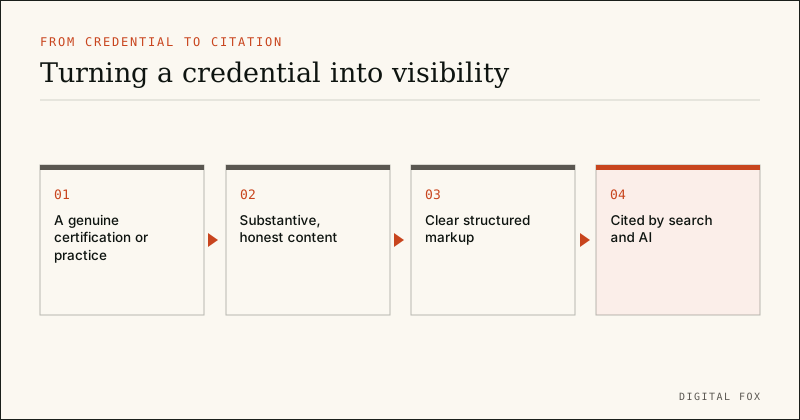
This is the guide to turning genuine sustainability into search and AI visibility. A growing segment of travelers actively searches for sustainable, eco-conscious, and responsible places to stay, and they are often exactly the engaged, values-driven, direct-inclined guests a hotel most wants. Meanwhile, search engines and AI systems increasingly want verifiable credentials, certifications, specific claims, real evidence, precisely the things a genuinely sustainable hotel already has. The opportunity is to connect the two: to take the real sustainability work a property has done and turn it into the content, structure, and signals that make the property visible and citable to the travelers and the systems looking for exactly what it offers. Most eco-conscious hotels never do this, which is why the opportunity is so open.
So we will work through it properly. Who the sustainable traveler is and how they search, because the audience shapes everything. Why genuine credentials are such powerful SEO and AI-citation assets. How to turn certifications and sustainability work into content that ranks and gets cited. The honesty imperative, because sustainability is the one area where dishonesty is both especially tempting and especially dangerous. How AI systems treat sustainability claims. And how this fits a property's broader direct-booking and authority strategy, because eco visibility is not a side project but a genuine competitive asset.
The sustainable traveler and how they search.
The strategy only makes sense once you picture the specific person it is meant to reach, because the sustainable traveler searches unlike a general guest and wants unusually specific things.
Everything starts with understanding the audience, because the sustainable traveler searches in specific ways and wants specific things, and the whole strategy is built around meeting that real intent. This is a genuine and growing segment, not a niche, and it behaves distinctively.
The sustainable traveler searches with intent that is often explicit and specific. They search for eco-friendly and sustainable hotels in a destination, for properties with particular certifications or credentials, for hotels that match specific values, local sourcing, low impact, community commitment, and for the concrete practices they care about. This is high-intent, values-driven search, and it is often more specific than ordinary hotel search because the traveler is filtering for genuine credentials rather than just a place to stay. A property that has the credentials and makes them visible meets this intent directly; one that has the credentials but hides them is invisible to exactly the guest who would most value them.
What makes this especially striking is how often the mismatch runs the wrong way. The properties that have done the most genuine sustainability work are frequently the ones treating it most modestly on their websites, tucking real, hard-won credentials into a brief note, while properties with thinner credentials sometimes shout louder. The result is a market where visibility is poorly correlated with genuine sustainability, and the traveler searching sincerely for a responsible stay struggles to find the properties that would most reward the choice. For a genuinely sustainable hotel, that mismatch is pure opportunity: the audience is actively looking, the systems want to surface real credentials, and the property already holds them, so the only thing standing between the hotel and the guests is the work of making the credentials visible.
The sustainable traveler also wants genuine evidence, not vague claims, which shapes what content actually works. Because this segment is values-driven and often sophisticated, they are skeptical of empty green marketing and want real, verifiable credentials, specific certifications, concrete practices, honest detail, and they can tell genuine sustainability from marketing gloss. This means the content that reaches them has to be genuinely substantive and honest, which happens to be exactly the kind of specific, credentialed content that also performs well in search and AI citation. Far from being a burden, this alignment is a gift: the property does not have to produce one kind of content to satisfy skeptical travelers and another to satisfy the systems, because the honest, specific, evidence-rich content that convinces the values-driven guest is the very same content the search and AI systems most want to reward. The audience's demand for real evidence and the systems' demand for verifiable credentials point in the same direction, which is what makes this opportunity so clean.
In most of hotel SEO the interests of the guest, the search engine, and the AI system have to be reconciled with some effort; in sustainable hotel SEO they are already aligned, all three wanting the same genuine, specific, verifiable credentials, so the work is less a matter of balancing competing demands than of simply making real credentials visible to parties who all want them.
And the sustainable traveler is often the guest a hotel most wants, which raises the stakes, since it means the payoff is not merely more traffic but access to close to the ideal guest, available to any genuinely sustainable hotel willing to activate its credentials. Values-driven travelers who choose a hotel for its genuine sustainability tend to be engaged, loyal, willing to pay for genuine value rather than chasing the lowest price, and inclined to build a real relationship with a property whose values they share, which makes them ideal direct-booking guests, the very guests a whole SEO program is often straining to reach and here arriving through content the property alone can authentically produce. Reaching this segment is not just about volume; it is about attracting exactly the engaged, direct-inclined, loyalty-prone guests that a hotel's whole direct-booking strategy is built to cultivate, which is why sustainable hotel SEO connects directly to the broader direct-booking goal covered in direct booking SEO.
It is worth dwelling on how well this audience fits a direct-booking strategy specifically, because it changes the economics of reaching them. A guest who chooses a property for its genuine values is not comparison-shopping on price across a dozen interchangeable options; they are looking for the specific property that matches what they care about, which is exactly the intent that converts to a loyal direct relationship rather than a one-off, commission-bearing OTA booking. Reaching the sustainable traveler well tends to produce not just a booking but the beginning of the kind of owned guest relationship a hotel most wants, which is why this segment rewards the investment out of proportion to its raw size.
Why genuine credentials are powerful SEO assets.
It is one thing to know the audience is there and another to see why the property is so unusually well equipped to reach it, which comes down to the nature of the credentials themselves.
Understanding the audience explains the demand; the next step is seeing why the very credentials a sustainable hotel already holds are so well matched to what the systems reward.
The heart of the opportunity is that genuine sustainability credentials are unusually powerful SEO and AI-citation assets, because they are exactly the kind of verifiable, specific, trustworthy signal that modern search and AI systems are built to recognize and reward. Understanding why turns a compliance list into a visibility strategy.
Consider the contrast with ordinary hotel content for a moment. Most of what hotels publish is generic and easily replicated, the same area guides and the same amenity descriptions any property could produce, which is precisely why so much of it fails to earn visibility. Genuine sustainability credentials are the opposite: specific, earned, verifiable, and unique to the property that holds them, which is exactly the profile of content and signal that modern systems are hungry for and generic content can never supply. A sustainable hotel therefore holds, in its real credentials, a natural answer to the single biggest weakness of ordinary hotel content, if only it turns those credentials into visible, structured assets rather than leaving them dormant.
Credentials are powerful because they are verifiable and specific, which is what modern quality systems want. A recognized sustainability certification, a concrete practice, a measurable commitment is a real, checkable, specific claim, the opposite of the vague, generic content the quality systems discount, and exactly the kind of trustworthy, evidenced signal they reward, in the spirit of E-E-A-T for hotels. A property with genuine credentials has, in effect, a supply of the verifiable trust signals that modern SEO is built to value, sitting unused. Turning them into visible, structured content converts a latent asset into an active one.
Credentials are powerful, too, because they differentiate genuinely, which search rewards. Sustainability, done authentically, is a real point of difference, and content built on genuine credentials is naturally distinctive, specific to the property, and hard to replicate, the opposite of the interchangeable content that fails. A property's real sustainability story, its specific certifications and practices and reasons, is content only it can produce authentically, which is exactly the kind of genuine, differentiated content that stands out in search and resists the commodity trap that generic hotel content falls into. The differentiation is durable precisely because it cannot be faked, a competitor can copy an area guide but not an earned certification, so the visibility built on genuine credentials rests on a foundation rivals cannot simply replicate.
And credentials are powerful because they support authority and entity, which increasingly drive visibility. Genuine credentials contribute to a property's overall authority and to how it is understood as an entity, a recognized, credentialed, distinctive property, which feeds the entity and authority signals that matter more and more in both traditional and AI search, connecting to entity SEO for hotels. Sustainability credentials are not just content topics; they are authority-building assets that strengthen how the whole property is recognized, which is why turning them into visible signals benefits the property's search presence broadly, not just on sustainability searches. A property known and recognized for genuine sustainability is a stronger, more clearly-defined entity overall, and that strengthened recognition lifts how the systems understand and surface it across the board, so the sustainability work quietly improves the property's standing well beyond the eco-conscious segment that first motivated it.
Turning credentials into content that ranks.
The gap this whole guide is about lives right here, between holding a powerful asset and having actually extracted any visibility from it.
Knowing that credentials are powerful assets is not the same as having extracted visibility from them, which takes specific work rather than a passing mention.
The practical work is turning genuine sustainability credentials and practices into content and structure that actually rank and get cited, which is a specific discipline rather than just mentioning sustainability somewhere. Doing it well is what separates a property that has credentials from one that gets visibility from them.
The first move is to give the credentials genuine, substantive content rather than a buried list. A property's certifications, practices, and commitments deserve real, specific, honest content that explains what they are, what they mean, what the property actually does, and why it matters, content that serves the sustainable traveler's genuine desire for evidence and gives search and AI systems real, citable substance. This is the opposite of a token sustainability page or a line in the footer; it is genuine content built around the real credentials, which is what actually reaches the audience and the systems. The principles of genuine, experience-led hotel content apply directly, since sustainability content is exactly the kind of specific, authentic material that works, produced from a position of genuine first-hand authority that no generic writer could match.
The second move is to structure the credentials so systems can recognize them. Specific certifications, concrete practices, and verifiable commitments should be presented in clear, structured ways, named explicitly, described specifically, marked up where appropriate, so that both search engines and AI systems can readily identify and cite them, drawing on the structured-data thinking in hotel schema markup. A credential that is stated clearly and structured well is far easier for systems to recognize, understand, and cite than one buried in prose, and the sustainable traveler's specific searches are best matched by content that clearly and specifically addresses exactly what they are looking for.
Structure matters more here than in ordinary content precisely because credentials are the kind of discrete, nameable facts that structure serves well. A certification, a specific practice, a measurable commitment is exactly the sort of clear, bounded claim that clean presentation and appropriate markup make legible to a machine, so the return on structuring sustainability content is unusually high compared with structuring vaguer material. A property that takes the modest trouble to state and mark up its credentials cleanly makes itself dramatically easier for both search engines and AI systems to recognize and cite on exactly the queries it wants to win.
The third move is to connect sustainability to the destination and the experience, not treat it in isolation. Sustainability content is strongest when woven into the property's genuine story, how the sustainability connects to the place, the local community, the guest experience, the property's whole identity, rather than isolated on a compliance page. This produces richer, more distinctive, more genuinely useful content that serves the values-driven traveler's real interest in a responsible experience of a place, and it connects sustainability to the destination and area content that anchors a property's local relevance, in the spirit of destination and area content. Woven through the property's genuine story, sustainability becomes a rich vein of distinctive content rather than a box-ticking page, which is what makes it perform.
A useful discipline across all three moves is to write for the specific question a sustainable traveler would actually ask, rather than for a generic idea of green content. Someone deciding where to stay asks concrete things, what the certification actually means, what the property genuinely does about energy or water or waste, how the local sourcing works, whether the community commitments are real, and content that answers those specific questions honestly is exactly what matches their search and gives systems something precise to cite. Building the sustainability content around the real questions the values-driven traveler asks, answered with genuine specificity, is what turns credentials into content that both ranks and satisfies, rather than content that merely gestures at being green.
The honesty imperative.
There is one condition on all of this, and it is absolute, because sustainability is uniquely unforgiving of the shortcut that other kinds of content sometimes survive.
Everything in this strategy rests on one non-negotiable foundation, and it is the place where sustainability SEO differs most sharply from other kinds: the credentials have to be real.
Sustainability is the one area of hotel SEO where honesty matters most and dishonesty is both especially tempting and especially dangerous, so the honesty imperative deserves its own treatment. Greenwashing, claiming sustainability a property has not genuinely earned, is a serious risk, and the whole strategy depends on the credentials being real.
The temptation is real because sustainability sells, and it is easy to claim. Because the sustainable traveler is a valuable segment and green credentials attract them, there is a temptation to overstate, to claim vague or unearned sustainability, to green up the marketing beyond what the property genuinely does. This is greenwashing, and it is both dishonest and dangerous, because the values-driven traveler is skeptical and sophisticated, quick to detect and punish empty claims, and because false sustainability claims can bring real reputational and, increasingly, regulatory consequences. The whole approach here rests on genuine credentials precisely because the audience and the systems both demand and reward authenticity and punish its absence.
The danger is compounded because AI systems can amplify claims. As AI systems synthesize and repeat information about a property, an exaggerated or false sustainability claim can be picked up and amplified, producing AI-generated representations of the property that its actual practices cannot support, which rebounds badly when guests or observers discover the gap. Honesty is not just ethically required; it is strategically essential, because dishonest claims in a world of AI synthesis can be amplified into liabilities, a dynamic examined in where AI gets its hotel information. The asymmetry is stark: a genuine credential amplified by AI systems spreads accurate, favorable signal about the property at no risk, while a false or exaggerated claim amplified the same way spreads a misrepresentation that can surface publicly, contradict guest experience, and prove very hard to correct once repeated across systems. The safest and most effective approach is genuine credentials honestly represented, because that is what survives scrutiny and amplification alike.
The constructive point is that honesty is not a limitation but the source of the strength. A property with genuine credentials, honestly and specifically represented, has exactly the verifiable, trustworthy, distinctive asset that the audience and the systems reward, and it never has to fear scrutiny because the claims are real. The honesty imperative, rather than constraining the strategy, is the strategy: build the visibility on genuine, verifiable credentials, represent them honestly and specifically, and the result is durable, scrutiny-proof, and effective, in a way that greenwashing never can be. Genuine sustainability is a real asset; the honesty is what makes it one.
There is a liberating consequence to this for a genuinely sustainable property: it never has to be cautious or vague about its claims, because the truth is its strongest material. A property that has really done the work can be as specific, detailed, and confident as it likes, naming exact certifications, describing precise practices, quantifying real commitments, secure that every claim withstands scrutiny, and that very specificity and confidence is what makes the content perform. Greenwashers must stay vague to avoid being caught; genuinely sustainable hotels can be precise, and precision is exactly what the audience and the systems reward, so honesty does not merely protect the strategy, it unlocks its full force.
Sustainability in AI search.
If genuine credentials are powerful in traditional search, the AI surface is where they may matter most of all, because it is built to reward exactly what they provide.
The credential-as-asset opportunity is strong in traditional search and arguably strongest on the AI surfaces that are increasingly mediating hotel discovery.
Because AI systems increasingly mediate hotel discovery, it is worth looking specifically at how they treat sustainability, since genuine credentials are unusually well suited to AI citation and the sustainable segment is exactly the kind of specific, values-driven query AI systems handle. This is where the credential-as-asset opportunity is arguably strongest.
AI systems favor verifiable, specific credentials, which sustainability provides abundantly. When an AI system answers a query about sustainable or eco-friendly hotels, it is looking for properties with genuine, identifiable, citable sustainability credentials, exactly the specific, verifiable signals a genuinely sustainable hotel can provide, the substance of generative engine optimization for hotels. Where an ordinary hotel gives an assistant little to distinguish it from a hundred others, a genuinely sustainable hotel gives it a clear, specific, citable reason to be surfaced for a whole class of values-driven queries. A property that has clearly stated, well-structured, genuine credentials is precisely what an AI system wants to cite in answer to a sustainability query, which makes genuine credentials one of the strongest possible foundations for AI visibility. The specificity that makes credentials trustworthy is exactly what makes them citable. This is a rare case where the requirements of trust and the requirements of visibility coincide perfectly: the very things that make a sustainability claim believable to a skeptical human, that it is named, specific, verifiable, and honest, are the things that make it usable to an AI system deciding what to cite, so a property does not have to choose between being credible and being visible, since the same genuine specificity serves both at once.
The sustainable query is also exactly the kind of specific, intent-rich question AI systems handle well and hotels can win. A traveler asking an assistant for genuinely sustainable hotels with particular credentials in a destination is making a specific, filterable request, and a property that genuinely matches, and has made its credentials clearly visible and structured, is well positioned to be the answer, in a way that ordinary undifferentiated hotels are not, connecting to the discovery dynamics in how independent hotels show up in AI search. The sustainable segment plays to the strengths of both genuine credentials and AI-mediated discovery, which is why it is such a promising place for an eco-conscious hotel to focus.
The advantage compounds because sustainable queries are often ones where the assistant genuinely needs help distinguishing real from claimed, and a property that has made its genuine credentials clearly citable does the assistant's work for it. Faced with a request for sustainable hotels, an assistant has to separate properties with verifiable credentials from those merely using green language, and a hotel that presents recognized certifications and specific, structured practices is exactly the property the assistant can confidently surface, because it can point to something real. In a segment defined by the difficulty of telling genuine from performative sustainability, being unmistakably genuine and clearly structured is a decisive advantage, and it is one only a truly credentialed property can claim.
The honesty imperative returns here with force, because AI amplification raises the stakes on authenticity. Since AI systems synthesize and repeat, genuine credentials clearly and honestly represented are amplified as accurate, valuable signals, while exaggerated claims risk being amplified into misrepresentations that rebound on the property. The AI surface rewards genuine, well-structured sustainability credentials especially richly and punishes greenwashing especially harshly, which reinforces the whole approach: real credentials, honestly and clearly represented, are the foundation, and they are exactly what makes a sustainable hotel visible and citable in AI-mediated discovery. The practical instruction that follows is simple and consistent across every surface: be genuinely sustainable, represent it honestly and specifically, structure it clearly, and let the audience and the systems reward exactly what you have really done, because that approach wins in traditional search, wins more in AI search, and never carries the risk that greenwashing always does.
Which credentials to lead with.
With the work of turning credentials into content understood, a property holding several genuine credentials faces a pleasant question of emphasis.
Once the credentials are being turned into real content, a property with several of them benefits from a sense of which to put front and center.
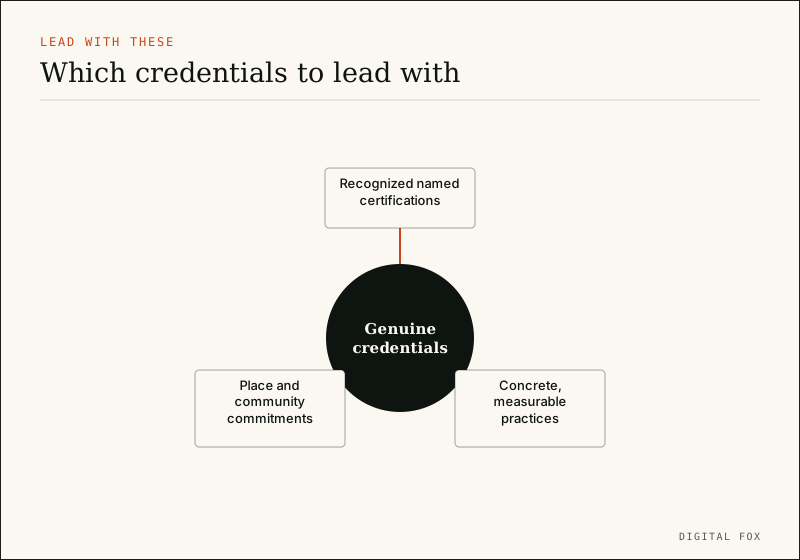
Not all sustainability credentials carry equal weight for visibility, so it is worth thinking about which to lead with, because a property with several genuine credentials gets the most from emphasizing the ones that are most recognized, most verifiable, and most matched to how travelers actually search. This is about prioritization, not exclusion, since all genuine credentials belong in the content.
Recognized, named certifications generally deserve the lead, because they are the most verifiable and the most searched. When a certification is an established, recognized standard, travelers search for it by name, systems can identify and cite it clearly, and it carries the trust of an external, verifiable credential, which makes it unusually powerful for both matching specific searches and providing citable authority. A property with a recognized certification should make that certification prominent, named, and well-structured, because it is the credential most likely to match a specific search and most readily cited, and burying it is the most costly omission of all.
Concrete, measurable practices come next, because specificity is what distinguishes genuine credentials from green gloss. Specific, verifiable practices, real environmental systems, measurable commitments, concrete local and community programs, are powerful because they are exactly the substantive evidence the skeptical traveler and the quality systems want, and because their specificity makes them distinctive and citable. Vague claims of being eco-friendly do little; specific, concrete, verifiable practices do a great deal, so the content should foreground the real, particular things the property does rather than general assertions of sustainability, since the particularity is the strength.
Credentials tied to place and community deserve emphasis too, because they connect sustainability to the property's distinctive local story. Genuine local sourcing, community commitments, and place-specific environmental work are valuable both as sustainability credentials and as distinctive, destination-anchored content that only this property in this place can authentically produce, which compounds their value. Leading with the credentials that are recognized, concrete, and locally distinctive, while including all the genuine ones, gives a property the strongest, most searchable, most citable sustainability presence, matched to how the values-driven traveler actually searches and how the systems actually cite. The place-anchored credentials deserve particular attention here because they do double duty, serving as genuine sustainability signals and as the kind of distinctive, destination-specific content that strengthens a property's local relevance at the same time, so investing in them pays off on two fronts at once, which makes them unusually efficient content to develop.
Sustainability as a durable competitive asset.
Step back from the tactics and the real significance comes into view: this is not a campaign that runs and ends but an asset that keeps compounding.
Seen whole, this is less a content tactic than the construction of something a competitor cannot easily take from you.
It helps to see sustainable hotel SEO not as a side project but as the building of a durable competitive asset, because that framing captures why the opportunity matters strategically and why it compounds over time rather than delivering a one-off gain. Genuine, well-represented sustainability credentials are an asset that keeps working.
The asset is durable because genuine credentials do not commoditize the way generic content does. A property's real sustainability story, its specific certifications, practices, and place-anchored commitments, is authentic to it and hard to replicate, so the visibility built on it is defensible in a way that visibility built on generic content is not, since a competitor cannot simply copy genuine credentials it has not earned. This makes sustainability visibility a durable competitive position rather than a temporary edge, which is exactly the kind of defensible asset a property wants its SEO to build, in the spirit of the owned, durable equity discussed in building owned audience and first-party equity.
The asset compounds because it strengthens the property's whole authority and entity, not just its sustainability searches. Genuine credentials contribute to how the property is recognized overall, feeding the entity and authority signals that lift visibility broadly, so the sustainability work pays off beyond the sustainable-traveler segment, strengthening the property's general search and AI presence. Sustainability visibility is not a walled-off niche; it is part of building the property's overall recognized authority, which is why it compounds with the rest of a good SEO program rather than sitting apart from it.
And the asset aligns with where travel and search are both heading, which protects its value over time. Sustainable travel is a growing, not shrinking, segment, and search and AI systems increasingly reward verifiable credentials and genuine authority, so a property that builds real sustainability visibility is aligning itself with the direction of both the market and the systems, an asset likely to grow more valuable rather than less. Building genuine sustainability visibility now, honestly and well, is an investment in an asset that compounds, defends itself, and appreciates as the sustainable segment grows and the systems increasingly reward exactly the verifiable credentials a genuinely sustainable hotel holds.
Framed this way, the decision for a genuinely sustainable property is not whether the credentials are worth turning into visibility but why they have been left dormant for so long. The work has been done, the certification earned, the practices established, the commitments made; the marginal effort to turn that existing, sunk investment into an active, compounding, defensible search and AI asset is small by comparison, and the return, ideal guests, durable differentiation, and alignment with where the market and the systems are heading, is large and lasting. For a property that has genuinely earned its credentials, activating them is one of the highest-return, lowest-risk moves in its entire SEO program.
A worked example: the credential that finally worked.
All of this becomes concrete in the story of a property that had every reason to be visible for its sustainability and, until it acted, was not.
The gap between a real credential and its missing visibility is easiest to see in a property that had done the hard work and gotten none of the recognition for it.
Consider a genuinely sustainable hotel that had done real, substantial work, a recognized certification, meaningful environmental practices, honest local and community commitments, and was getting almost no search visibility from any of it. The credentials lived on a single, sparse sustainability page, stated briefly, buried in the site, generating essentially no rankings, no AI citations, and no guests who had found the property through its sustainability. The asset was real and entirely dormant.
The diagnosis was that the property had credentials but had never turned them into visibility. The genuine sustainability work had been treated as a compliance matter to note, not as an authority asset to develop, so it sat as a brief list rather than working as content, structure, and signal. In the property's own mind, the sustainability work was something it did, an operational reality, rather than something it communicated, a visibility asset, and that quiet category error, treating genuine credentials as internal facts rather than external signals, is exactly what keeps so many real credentials dormant. The sustainable travelers searching for exactly what the property offered never found it, because the property had not built the specific, credentialed, structured content that would match their searches, and the AI systems answering sustainability queries had nothing clear and citable to draw on. The gap was entirely between the real credentials and their non-existent visibility.
Notably, the property had assumed its sustainability was simply not something guests searched for, which is why it had never invested in making it visible. That assumption was precisely backwards: the searches existed and were growing, the property had exactly what those searchers wanted, and the only reason it saw no traffic was that it had made itself impossible to find on those terms. The false belief that there was no demand had become self-confirming, since a property invisible for sustainable searches naturally sees no sustainable-search traffic and concludes, wrongly, that the demand is not there. Testing that assumption, by actually building the visibility and seeing who came, is what revealed the demand had been there all along.
The correction was to turn the dormant credentials into active assets. The certification and practices were given genuine, substantive, honest content that explained what they were, what the property actually did, and why it mattered, serving the sustainable traveler's real desire for evidence. The credentials were structured and stated clearly so that search engines and AI systems could readily recognize and cite them. The sustainability was woven into the property's genuine story of place, community, and experience, producing rich, distinctive content rather than an isolated page. And the whole thing was kept scrupulously honest, built entirely on the property's real credentials, so it could withstand any scrutiny.
The result was that the property became visible to exactly the guests it most wanted. It began appearing for sustainable and eco-conscious hotel searches in its destination, getting cited by AI systems answering sustainability queries, and attracting the values-driven, engaged, direct-inclined travelers who had been searching for precisely what it offered and had been unable to find it. Nothing about the property's actual sustainability changed; the credentials were exactly as real as before. What changed was that the property had finally turned its genuine, hard-won credentials into the visibility they had always deserved, reaching the guests who valued them most, which is the whole opportunity that sits unused in so many genuinely sustainable hotels.
The example is worth holding onto because it is so representative. There was no clever trick and no manufactured advantage; there was only a real asset that had been left dormant and was finally put to work. That is what sustainable hotel SEO almost always is: not the creation of something new but the activation of something genuine the property already possessed and had failed to make visible. Any hotel that has done real sustainability work and left it unexpressed on the website is, in effect, in the same position this property was in before the correction, holding a genuine, valuable, dormant asset one step away from becoming an active source of exactly the guests it most wants.
What not to do.
The cautions below all serve one aim: to convert genuine sustainability into genuine visibility, without ever crossing into the dishonesty that would undo it.
- Do not leave your credentials buried in a footer or a sparse page. Genuine certifications and practices are powerful, verifiable SEO and AI-citation assets, and leaving them as a compliance note wastes them. Turn them into substantive, structured content.
- Do not greenwash. Claiming sustainability you have not genuinely earned is dishonest and dangerous, quickly detected by a skeptical audience, punished reputationally and increasingly by regulation, and amplifiable by AI systems into a liability. Build entirely on real credentials.
- Do not treat sustainability content as vague marketing. The values-driven traveler and the quality systems both want specific, verifiable evidence, not green gloss. Be concrete about actual certifications, practices, and commitments.
- Do not isolate sustainability on a single compliance page. Woven into the property's genuine story of place, community, and experience, sustainability becomes rich, distinctive content. Isolated, it becomes a box-ticking page that performs poorly.
- Do not neglect structure. Credentials stated clearly and structured well are far easier for search engines and AI systems to recognize and cite than credentials buried in prose. Make them explicit and machine-legible.
- Do not ignore the AI opportunity. Genuine, well-structured sustainability credentials are unusually well suited to AI citation, and the sustainable query is exactly what AI systems handle well. This is one of the strongest places for a sustainable hotel to build AI visibility.
- Do not undervalue the audience. Sustainable travelers tend to be engaged, loyal, and direct-inclined, exactly the guests a direct-booking strategy wants. Reaching them is not a niche exercise but a route to ideal guests.
Frequently asked questions.
These are the questions eco-conscious hoteliers ask once they realize their genuine credentials have been quietly generating nothing.
Do travelers really search specifically for sustainable hotels?
Yes, and it is a genuine and growing segment rather than a niche. Sustainable travelers search with intent that is often explicit and specific: for eco-friendly and sustainable hotels in a destination, for properties with particular certifications or credentials, for hotels matching specific values like local sourcing or low impact, and for the concrete practices they care about. This is high-intent, values-driven search, often more specific than ordinary hotel search because the traveler is filtering for genuine credentials. Just as important, these travelers tend to be engaged, loyal, willing to pay for genuine value rather than chasing the lowest price, and inclined to book direct with properties whose values they share, which makes them close to ideal guests. A property with genuine credentials that makes them visible reaches exactly this valuable segment.
Why are sustainability credentials good for SEO specifically?
Because they are exactly the kind of verifiable, specific, trustworthy signal modern search and AI systems are built to recognize and reward. A recognized certification or concrete practice is a real, checkable, specific claim, the opposite of the vague, generic content quality systems discount and precisely the evidenced signal they value. Credentials also differentiate genuinely, since authentic sustainability is a real point of difference and content built on it is naturally distinctive and hard to replicate, avoiding the commodity trap generic hotel content falls into. And they support authority and entity, contributing to how the whole property is recognized, which increasingly drives visibility in both traditional and AI search. In effect, a genuinely sustainable hotel is sitting on a supply of exactly the trust signals modern SEO rewards.
How do I turn my certifications into content that actually ranks?
Three moves. First, give the credentials genuine, substantive content rather than a buried list: explain what they are, what they mean, what the property actually does, and why it matters, serving the traveler's desire for real evidence and giving systems citable substance. Second, structure them so systems can recognize them: name certifications explicitly, describe practices specifically, and mark them up where appropriate so search engines and AI systems can readily identify and cite them. Third, connect sustainability to the destination and experience rather than isolating it, weaving it into the property's genuine story of place, community, and guest experience to produce richer, more distinctive content. Together these turn a compliance list into content that matches the sustainable traveler's specific searches and gives systems something clear to cite.
What is greenwashing and why is it dangerous for SEO?
Greenwashing is claiming sustainability a property has not genuinely earned, overstating, making vague or unearned green claims, greening up the marketing beyond what the property actually does. It is dangerous for several reasons. The values-driven traveler is skeptical and sophisticated, quick to detect and punish empty claims. False sustainability claims can bring real reputational and, increasingly, regulatory consequences. And because AI systems synthesize and repeat information, an exaggerated claim can be amplified into an AI-generated representation the property cannot support, rebounding badly when the gap is discovered. So greenwashing is both dishonest and strategically self-defeating. The whole effective approach rests on genuine credentials honestly represented, because that is what survives scrutiny and amplification, which is exactly what greenwashing cannot do.
How do AI systems treat hotel sustainability claims?
AI systems favor verifiable, specific credentials, which genuine sustainability provides abundantly. When an assistant answers a query about sustainable or eco-friendly hotels, it looks for properties with genuine, identifiable, citable credentials, exactly the specific, verifiable signals a real sustainable hotel can offer, so clearly stated, well-structured, genuine credentials are precisely what it wants to cite. The sustainable query is also the kind of specific, intent-rich request AI systems handle well, and a property that genuinely matches and has made its credentials clearly visible is well positioned to be the answer. But AI amplification cuts both ways: genuine credentials honestly represented are amplified as accurate, valuable signals, while exaggerated claims risk being amplified into misrepresentations. The AI surface rewards genuine, structured credentials richly and punishes greenwashing harshly.
We are genuinely sustainable but our website barely mentions it. Where do we start?
Start by recognizing that you are sitting on a dormant asset, and the work is to activate it. Take stock of your genuine credentials, certifications, practices, commitments, and give them real, substantive, honest content that explains what they are and what you actually do, rather than the brief list they probably occupy now. Structure and state them clearly so search engines and AI systems can recognize and cite them. Weave the sustainability into your genuine story of place, community, and experience rather than isolating it on a compliance page. Keep everything scrupulously honest and built entirely on your real credentials. This turns credentials that are generating no visibility into content, structure, and signal that reach the sustainable travelers searching for exactly what you offer, which is the whole opportunity most genuinely sustainable hotels never use.
Is sustainable hotel SEO just for eco-resorts, or for any hotel with green credentials?
It is for any hotel with genuine sustainability credentials, not only for properties whose whole identity is eco-tourism. The strategy is about turning real, verifiable credentials, whatever their scale, into visibility, so a mainstream city hotel, a boutique inn, or a large resort with a genuine certification, meaningful environmental practices, or honest community and sourcing commitments has exactly the same opportunity: to reach the values-driven travelers who search for those credentials and to give AI systems citable sustainability signals. The key qualifier is genuine, not total, the credentials have to be real and honestly represented, but they do not have to define the entire property. Any hotel that has done real sustainability work and left it dormant on the website is leaving an SEO and AI-visibility asset unused, regardless of whether sustainability is its central identity or one genuine dimension of a broader offering.
If your hotel has done genuine sustainability work that is generating little or no search visibility, the opportunity is to turn those real credentials into the content, structure, and signals that reach the travelers and AI systems looking for exactly what you offer. Doing that honestly and well, so it reaches your ideal guests and withstands any scrutiny, is the kind of specific, authentic work a hotel SEO agency that understands both sustainability and search should do. You can see the approach on the services page, or reach us at inquiries@digitalfoxllc.com. Your credentials are real. It is time to make them visible.